

Essential details
Shipping:Express Delivery
Product Introduction
Hydroponic Nutrient Solution vs. Traditional Soil
| Aspect | Hydroponic Nutrient Solution | Traditional Soil |
|---|---|---|
| Nutrient Delivery | Direct absorption; no competition from weeds/microbes. | Slow diffusion; nutrient loss due to leaching. |
| Water Efficiency | Recirculated system uses 90% less water than soil. | High evaporation & runoff waste. |
| Growth Speed | 30–50% faster due to optimized nutrient access. | Limited by soil quality & root expansion. |
| Disease Risk | Lower risk of soil-borne pathogens (e.g., nematodes). | Prone to fungal/bacterial infections. |
| Space & Scalability | Suitable for vertical farming and urban agriculture. | Requires large land areas. |

Automation Logic:
Nutrient Control: Dosing pump adjusts pH/EC if values drift from setpoints.
Oxygenation: Air pump cycles on/off based on DO levels.
Lighting: LEDs dim if PAR exceeds 400 μmol/m²/s.
Nutrient Control: Dosing pump adjusts pH/EC if values drift from setpoints.
Oxygenation: Air pump cycles on/off based on DO levels.
Lighting: LEDs dim if PAR exceeds 400 μmol/m²/s.
Hydroponics is a soilless cultivation method where plants grow in a nutrient-rich water solution, with their roots either submerged or intermittently exposed to the solution. Unlike traditional farming, hydroponics delivers nutrients directly to the roots, maximizing growth efficiency.
Hydroponic Environmental Monitoring Sensors
Precise control of water chemistry and ambient conditions is critical. Key sensors include:
(1) Nutrient Solution Monitoring
| Sensor | Purpose | Target Range |
|---|---|---|
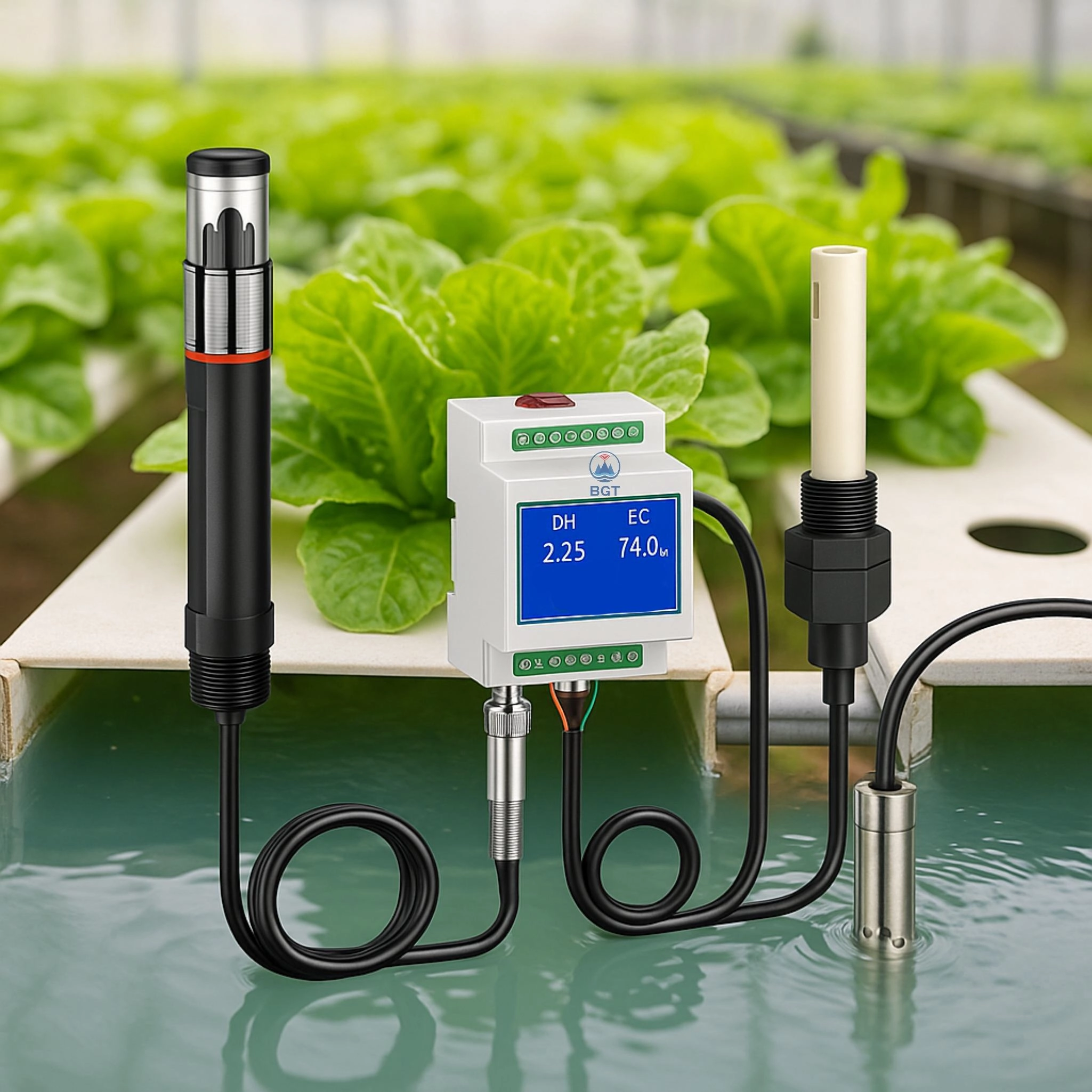
| EC Sensor | Measures nutrient concentration (electrical conductivity). | 1.0–3.0 mS/cm (crop-dependent). |
| pH Sensor | Maintains optimal acidity for nutrient uptake (e.g., lettuce: pH 5.5–6.5). | ±0.1 accuracy. |
| Dissolved Oxygen (DO) | Ensures root oxygenation; prevents rot (DO >5 mg/L). | Optical/electrochemical. |
| Water Temperature | Affects root health and oxygen solubility (ideal: 18–22°C). | ±0.5°C accuracy. |
(2) Ambient Environment Monitoring
| Sensor | Purpose |
|---|---|
| Air Temp/Humidity | Prevents condensation (humidity 50–70%) and heat stress. |
| CO₂ Sensor | Optimizes photosynthesis (800–1200 ppm for fast growth). |
| PAR Sensor | Measures photosynthetically active radiation (e.g., leafy greens: 200–400 μmol/m²/s). |
Small-Scale Hydroponic Sensor Setup (NFT System for Lettuce)
System Specifications:
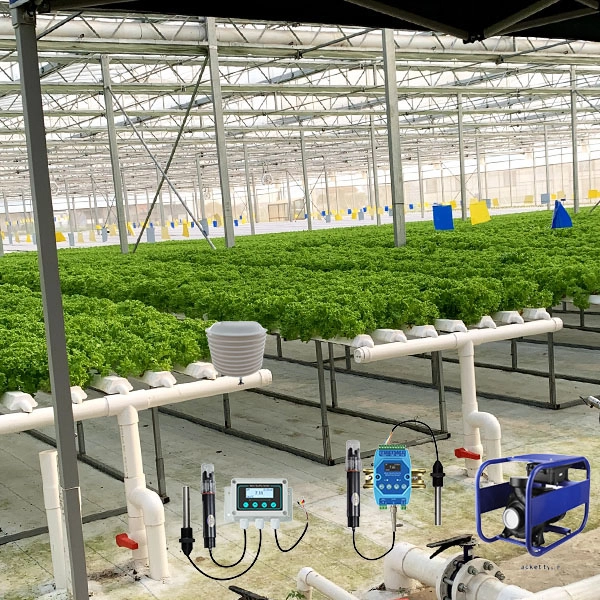
Type: Nutrient Film Technique (NFT) with 12 lettuce plants.
Area: 2 m² indoor grow tent with LED lighting.
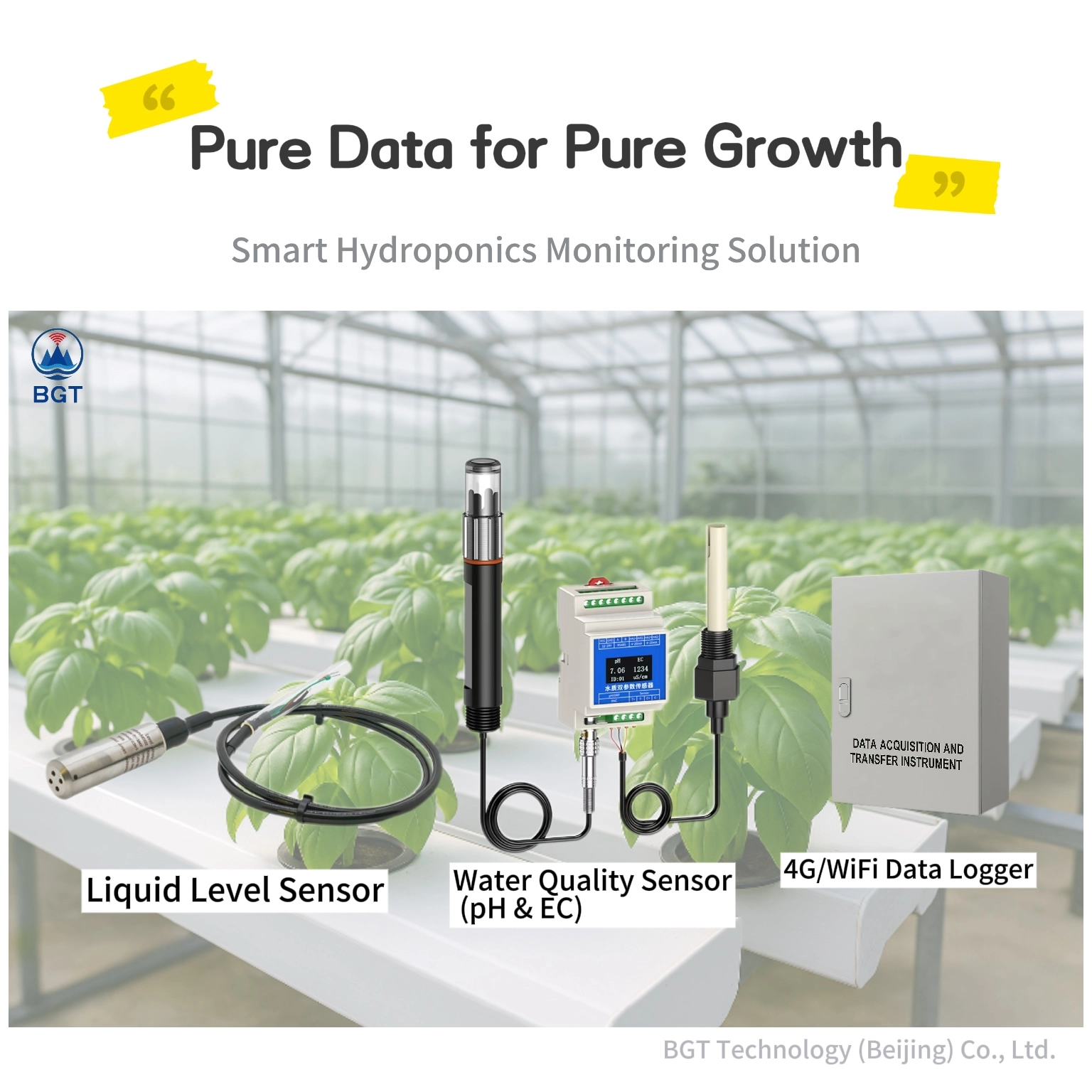
Automation: Cloud-based monitoring + automated pH/EC adjustment.
Recommended Sensors:
| Sensor | Model Example | Qty | Notes |
|---|---|---|---|
| EC/pH Combo Sensor | BGT-WMPS(O1) | 1 | Submerged in nutrient reservoir. |
| DO Sensor | BGT-WDO(K) | 1 | Calibrate weekly. |
| Water Temp Sensor | BGT-WMPS(O1) | 1 | Attached to reservoir wall. |
| Air Temp/Humidity | BGT-WSD2 | 1 | Mounted at canopy height. |
| CO₂ Sensor | BGT-WSD2 | 1 | For enclosed spaces. |
| PAR Sensor | BGT-PAR1 | 1 | Positioned near leaves. |