
Your farm, connected. Your crops, precisely monitored.
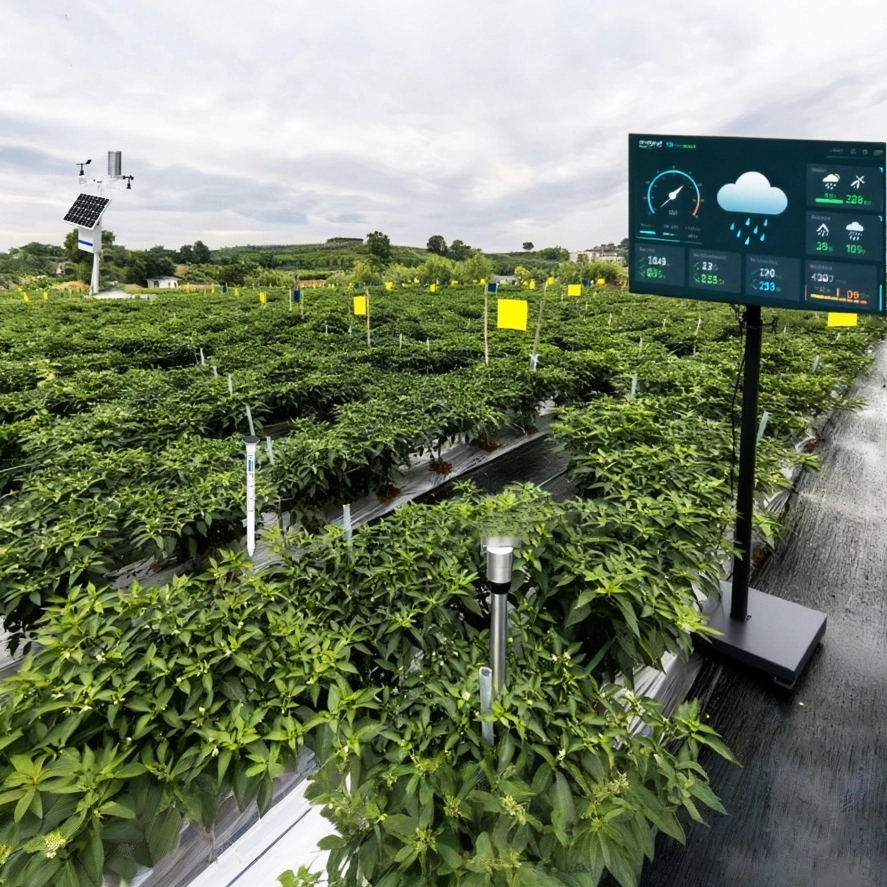
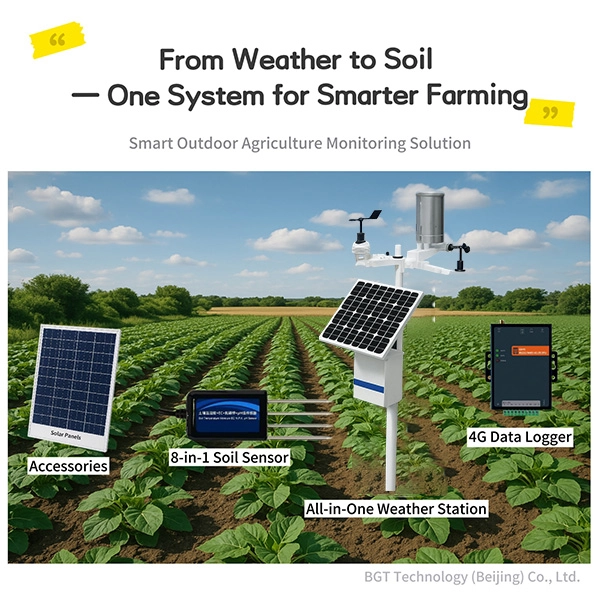
The outdoor field intelligent monitoring system takes meteorological environment and soil conditions as its core monitoring targets. The system collects data such as wind speed, rainfall, temperature and humidity, radiation, soil moisture and nutrients, and realizes remote monitoring and early warning through the 4G cloud platform, assisting in farmland irrigation, pest and disease control, and agricultural decision-making.
•All-in-One Environmental Monitoring: Track key metrics including wind, rainfall, temperature, humidity, and solar radiation from a single, integrated system.
•In-Depth Soil Health Analysis: Gain precise insights into soil water content and nutrient levels, the foundation of crop vitality.
•Real-Time Alerts & Predictive Insights: Get instant SMS or app notifications for critical events like high winds, heavy rainfall, or low soil moisture. Move from reactive to proactive farming.
•Remote Access via 4G Cloud Platform: View your farm's status anytime, anywhere, on any device. Your data is securely stored and easily accessible.
•Data-Driven Decision Support: Leverage historical and real-time data to make scientifically-backed decisions on irrigation, fertilization, and pest management.
1. System Overview
2. Detailed Equipment List
The following is a suggested equipment list tailored for a 100-square-meter plot, focusing on cost-effectiveness and essential functionalities.
1. System Overview
2. Detailed Equipment List
3. Scheme Implementation Details
Sensor Deployment: The soil sensors should be installed at different locations within the plot to account for variability. The weather station and pest monitoring lamp should be placed in an open area, clear of tree shade, to ensure accurate readings and sufficient solar exposure. Data Flow: Sensors collect data at set intervals (e.g., every 2 hours). This data is wirelessly sent to the gateway, which then transmits it to the cloud platform via cellular network. The platform analyzes the data and presents it to the user via a mobile app or computer dashboard. Smart Alerts & Control: The system can be configured to send automatic alerts (via SMS or app notification) when parameters exceed predefined thresholds. For example, an alert can be triggered if soil moisture drops below a certain level. This can be linked to an automated drip irrigation system for immediate action.
4. Expected Benefits
Precision Management: Data-driven irrigation and fertilization can reduce water and fertilizer usage by 20-30% and lower labor costs. Proactive Pest/Disease Control: Early warning allows for targeted intervention, potentially reducing pesticide use by 20-30% and promoting eco-friendly practices. Informed Decision-MakingHistorical data on weather, soil, and pest pressures helps optimize long-term planting strategies and improve fruit quality and yield.
The equipment list can be implemented in phases. Starting with the core modules (e.g., soil and weather monitoring) is recommended, with pest monitoring and automated control added later based on budget and needs. Regular maintenance, such as cleaning sensors, replacing lure cores in traps, and ensuring solar panels are unobstructed, is crucial for long-term system accuracy and reliability. When selecting equipment, ensure it has a high Ingress Protection (IP) rating (e.g., IP66) for durability in outdoor conditions.
