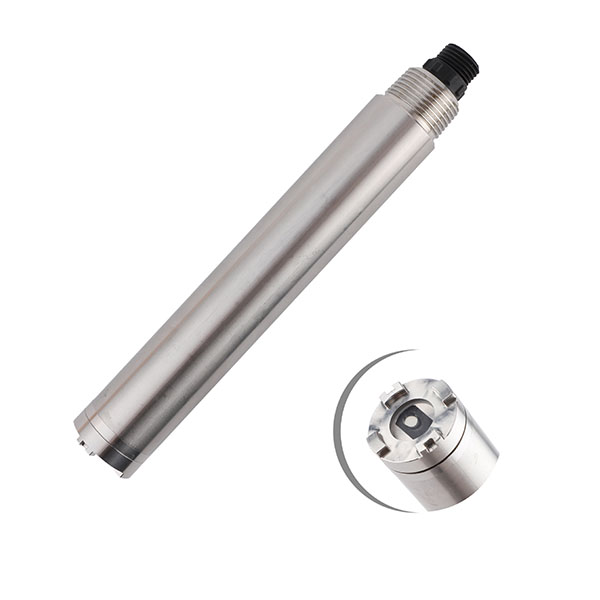

Key Parameters for Cyanobacteria (Blue-Green Algae) Monitoring in Aquatic Ecosystems
Cyanobacteria monitoring focuses on tracking population density, spatial distribution, and temporal trends to predict blooms, assess ecological health, and guide mitigation. Excessive cyanobacterial growth can cause hypoxia, toxin release (e.g., microcystins), and threats to aquatic life and public health.
Core Monitoring Indicators
Chlorophyll-a Concentration: Indirect proxy for algal biomass due to cyanobacteria’s chlorophyll-a content.
Phycocyanin/Phycoerythrin Fluorescence: Cyanobacteria-specific pigments detected via fluorescence for species-specific quantification.
Cell Density: Direct counts using microscopy or flow cytometry.
Microcystin Detection: Toxin analysis for harmful algal bloom (HAB) risk assessment.
Selecting Cyanobacteria Monitoring Sensors: Key Considerations
Sensor selection depends on objectives (early warning, research, or remediation), waterbody type (lakes, rivers, reservoirs), and budget.
1. Sensor Technologies
Fluorometric Sensors:
Principle: Measures phycocyanin (PC) or chlorophyll-a fluorescence for real-time, in-situ detection.
Advantages: Rapid response, high specificity, field-deployable.
Examples: Turner Designs Cyclops, YSI EXO, Xylem’s GLI platform. BGT Hydromet, about 800 dollars.
Optical/Multispectral Sensors:
Uses spectral reflectance to identify algal communities; suitable for drones/satellites .
Flow Cytometry:
Lab-based, species-level resolution but costly (e.g., CytoSense).
2. Critical Performance Factors
Detection Range: Sensitivity must match expected cyanobacteria concentrations (e.g., oligotrophic vs. eutrophic waters).
Anti-Interference: Minimize cross-sensitivity to turbidity or other algae (e.g., green algae).
Depth Capability: Pressure-rated sensors for profiling in deep water.
Data Output: Real-time telemetry (4G/IoT) or offline storage options.
3. Environmental Durability
Ingress Protection: IP68 rating for waterproofing and anti-biofouling coatings.
Temperature/Salinity Tolerance: Adaptability to extreme climates or brackish waters.
4. Ancillary Features
Multi-Parameter Integration: Some sensors combine pH, dissolved oxygen, and turbidity (e.g., YSI EXO2).
Auto-Cleaning: Brushes or ultrasonic wipers to reduce maintenance.
5. Cost & Maintenance
Capital Cost: Fluorometers (~1,500–15,000 USD); remote sensing more expensive but scalable.
Operational Cost: Calibration frequency, consumables (e.g., reagents), and cleaning requirements.
◀◀ Product Parameters ▶▶
Parameter | Specification |
|---|---|
Measurement Principle | Fluorometric Method (Phycocyanin Fluorescence) |
Measurement Range | 0–300.0 Kcells/mL |
Resolution | 0.1 Kcells/mL |
Accuracy | ±3% of reading or ±0.3°C, linearity R² ≥ 0.999 |
Response Time (T₉₀) | <30 seconds |
Detection Limit | 1 Kcells/mL |
Calibration Method | Two-point calibration |
Cleaning Method | None (Manual cleaning required) |
Temperature Compensation | Automatic (Pt1000 sensor) |
Output Options | RS-485 (Modbus RTU), 4–20 mA (optional) |
Storage Temperature | -5 to 65°C |
Operating Conditions | 0–50°C, <0.2 MPa |
Housing Material | 316L Stainless Steel |
Installation Method | Submersible (3/4" NPT threaded) |
Power Consumption | 0.2W @ 12V DC |
Power Supply | 12–24V DC |
Ingress Protection | IP68 (Fully waterproof, dustproof) |
Kcells/mL= Thousand cells per milliliter. T₉₀= Time to reach 90% of final measurement value.
How It Works
Installation distance requirements: Keep at least 5cm from the side wall and at least 20cm from the bottom.
.The cable is a 4-core twisted shielded wire. The wire sequence is defined as:
Red wire - power cord (12-24VDC)
Black wire - ground wire (GND)
Youdaoplaceholder0 Blue line - 485A
White wire - 485B
Before powering on, carefully check the wiring sequence to avoid unnecessary losses caused by incorrect wiring.
Wiring instructions: Considering that the cables are constantly immersed in water (including seawater) or exposed to the air, all wiring points must be treated for waterproofing. The user's cables should have a certain anti-corrosion ability.
How to read the value? We have a dedicated LED screen data logger, and you can also connect to your own cloud platform for data management
◀◀ Application Scenarios ▶▶
1. Drinking Water Supply & Reservoir Protection
Use Case: Early detection of algal blooms in raw water sources to prevent microcystin contamination.
Why It Works:
Targets phycocyanin (PC) fluorescence for cyanobacteria-specific detection.
Low detection limit (1 Kcells/mL) enables proactive response.
Real-time data output (Modbus RTU) integrates with SCADA systems.
Typical Deployment:
Fixed monitoring buoys near water intakes.
2. Lake & River Ecosystem Health
Use Case: Tracking eutrophication-driven cyanobacterial dynamics for ecological assessments.
Why It Works:
Rapid response (<30 sec) captures short-term environmental fluctuations.
Automatic temperature compensation (Pt1000) ensures data accuracy.
316L stainless steel housing resists long-term corrosion.
Typical Deployment:
Long-term ecological observatories in eutrophic lakes.
Riverine inflow zones to monitor algal transport.
3. Aquaculture Water Quality Management
Use Case: Preventing fish kills by controlling algal overgrowth in ponds/tanks.
Why It Works:
Real-time alerts enable timely aeration or water exchange.
Submersible design (3/4"NPT) suits cages or open ponds.
IP68 rating withstands biofouling and humid conditions.
Typical Deployment:
Shrimp/prawn culture systems.
Freshwater fish farms with bloom risks.
4. Wastewater Treatment & Constructed Wetlands
Use Case: Evaluating algae-mediated nutrient removal (N/P) in treatment systems.
Why It Works:
Fluorometry minimizes turbidity interference.
Low power (0.2W) supports solar-powered remote sites.
Typical Deployment:
Effluent polishing wetlands in WWTPs.
5. Smart City & Urban Water IoT
Use Case: Public health protection in urban water bodies (parks, canals).
Why It Works:
RS-485/4-20mA outputs connect to IoT gateways (e.g., NB-IoT).
Minimal maintenance (no auto-cleaning) reduces costs.
Typical Deployment:
Algal bloom early-warning platforms for city rivers.
Park pond water quality dashboards.
6. Industrial Cooling Water Systems
Use Case: Preventing algal biofouling in cooling towers/process water.
Why It Works:
0–50°C operating range covers industrial conditions.
316L material resists chemical corrosion.
Typical Deployment:
Power plant cooling water monitoring.
Limitations & Considerations
Avoid in:
Ultra-oligotrophic waters (<1 Kcells/mL; lab verification advised).
Extreme pH (<2 or >12) or high-pressure (>0.2 MPa) environments.
Validation Protocol:
Periodic microscope counts for sensor calibration.
Toxin testing (e.g., ELISA) during bloom peaks.
Optimization Tips
Installation: Shield optical window from direct sunlight.
Maintenance: Manual cleaning (no auto-cleaning feature).
Multi-Point Monitoring: Deploy at varying depths/locations for spatial profiling.