
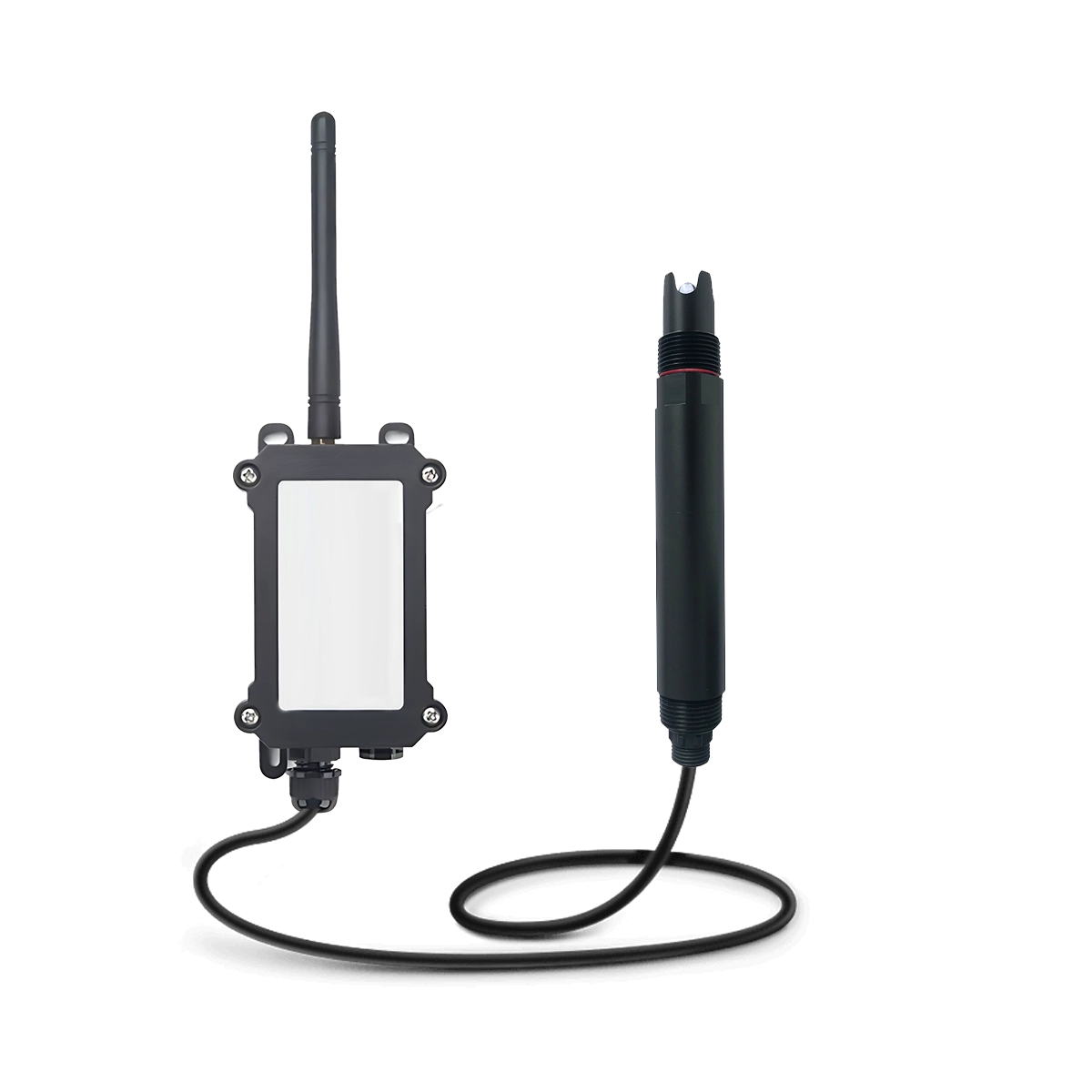
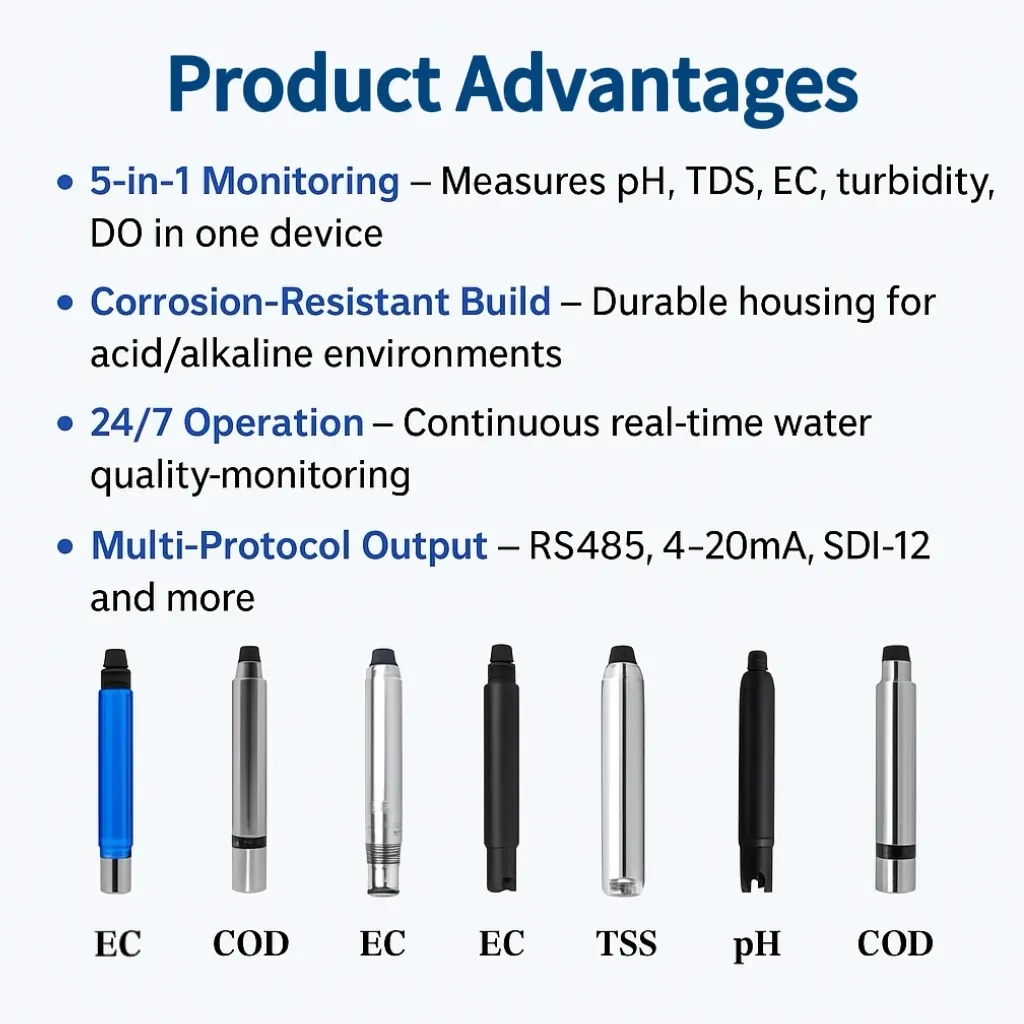
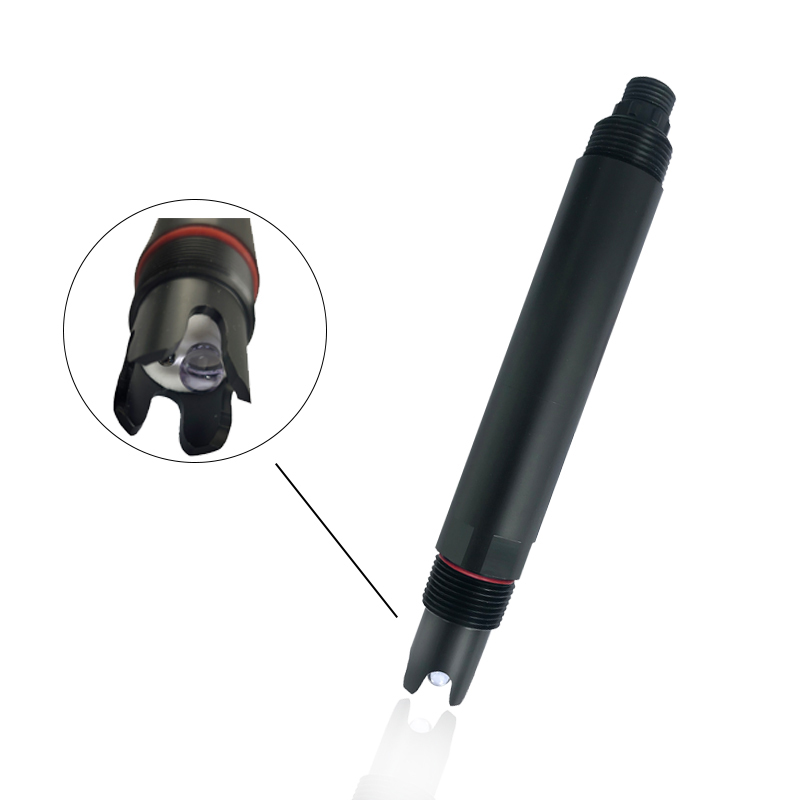
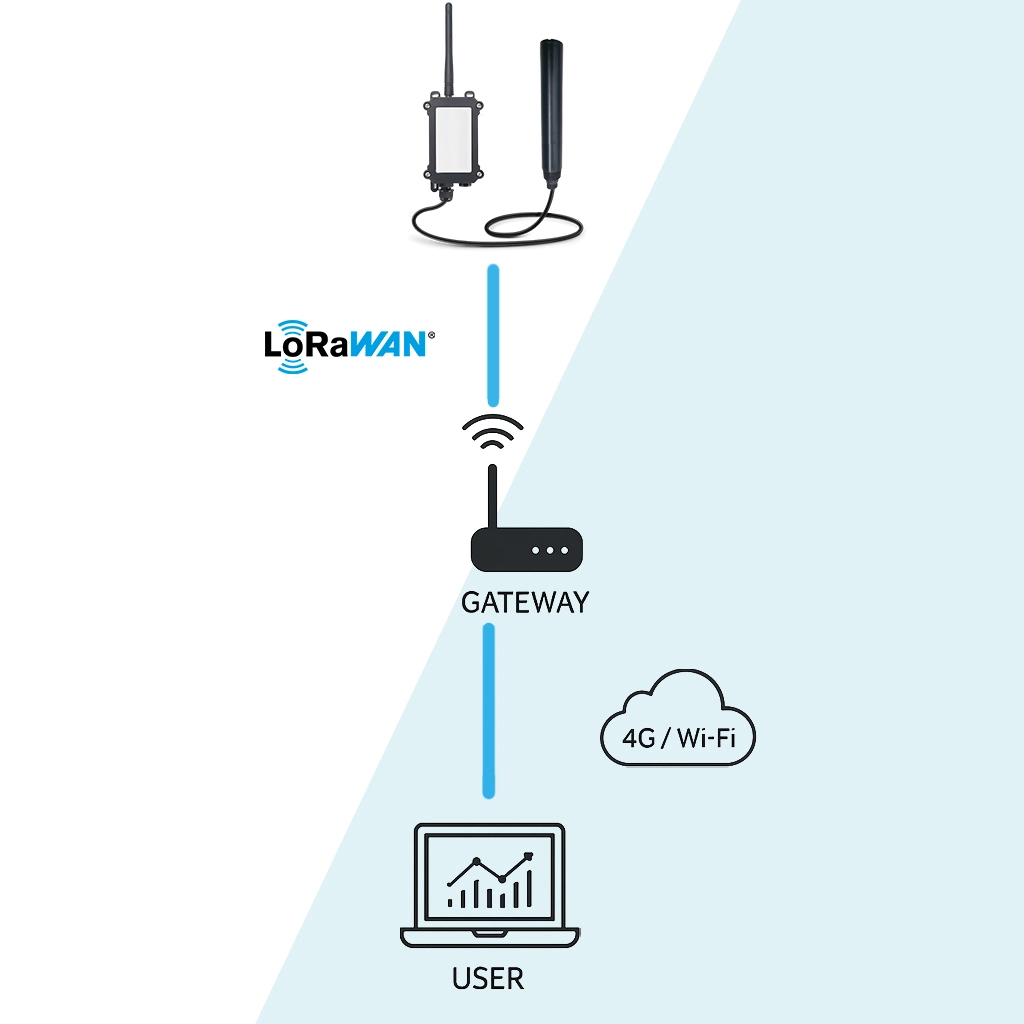
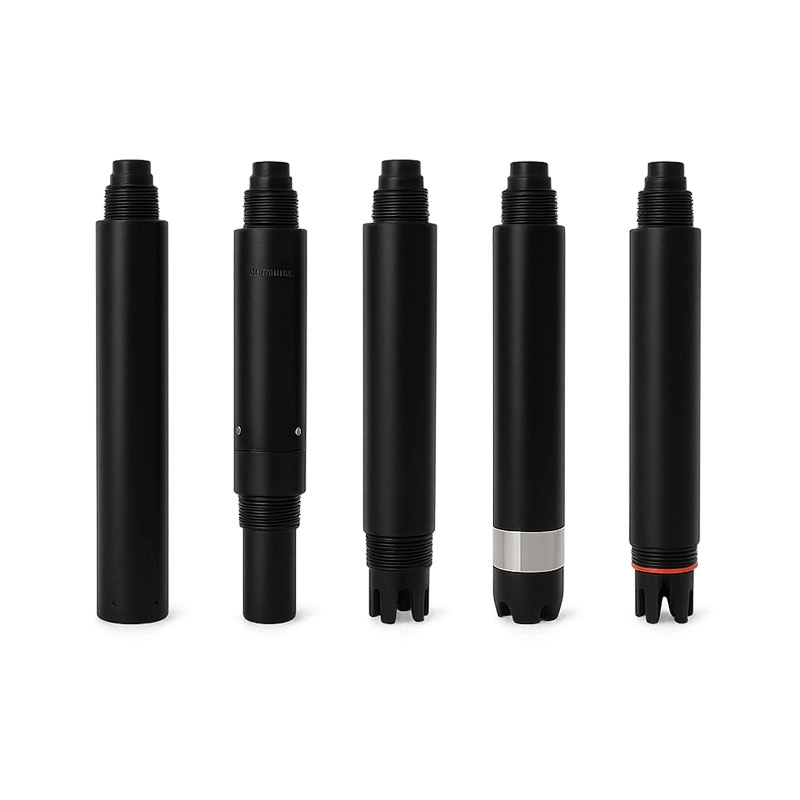

A water pH sensor is an electronic device used to measure the acidity or alkalinity of a liquid (typically water). It detects the hydrogen ion concentration in the solution and converts it into a measurable electrical signal, usually in millivolts (mV), which is then translated into a pH value.
How Does a pH Sensor Work?
A pH sensor consists of two main components:
pH Electrode (Glass Electrode)
Made of a special glass membrane sensitive to hydrogen ions (H⁺).
When immersed in water, hydrogen ions interact with the glass, creating a small voltage difference.
Reference Electrode
Provides a stable reference voltage for comparison.
Typically filled with a potassium chloride (KCl) solution.
Working Principle:
The pH electrode generates a voltage proportional to the H⁺ ion concentration.
The reference electrode ensures a stable baseline.
The difference in voltage between the two electrodes is measured and converted into a pH value using the Nernst equation:
E=E0−F2.303⋅RT⋅pH
(where E= measured voltage, E0= reference voltage, R= gas constant, T= temperature, F= Faraday constant)
Most modern pH sensors include a temperature sensor for automatic temperature compensation (ATC) to ensure accurate readings.
How to Use a pH Sensor to Measure Water pH?
Calibration (Essential for accuracy)
Use pH buffer solutions (e.g., pH 4.0, 7.0, 10.0).
Immerse the sensor in each buffer and adjust the readings accordingly.
Measurement
Rinse the sensor with distilled water.
Dip it into the water sample and wait for stabilization (usually 30 sec to 2 min).
Record the pH reading.
Maintenance
Store the sensor in a storage solution (usually pH 4 or KCl solution).
Clean it regularly to prevent contamination.
Swimming Pool Sewage Aquaculture Hydroponics Water Quality Analysis
• Signal output: RS-485 (Modbus/RTU protocol).
• Convenient connection to third-party devices such as PLCs, DCS, industrial control computers, general-purpose controllers, paperless recording instruments or touch screens.
• Dual high-impedance differential amplifier with strong anti-interference and fast response.
• The patented pH probe, the internal reference solution oozes extremely slowly from the microporous salt bridge at a pressure of at least 100 kpa (1 Bar), and its forward bleed continues for more than 20 months. Such a reference system is very stable and the electrode life is extended by a factor of two compared to conventional industrial electrodes.
• Easy to install: 3/4 NPT pipe thread for easy submersible installation or installation in pipes and tanks.
• IP68 protection grade.

Product Name | Online Water PH Sensor |
Measuring range | 0~14pH |
Resolution | 0.01pH |
Accuracy | ±0.1pH |
Working temperature | 0~65℃ |
Working pressure | <0.2MPa |
Temperature compensation | Auto temperature compensation (NTC) |
Power supply | 12~24VDC ±10% |
Signal output | RS-485(Modbus/RTU); RS485&4-20mA |
Wetted material | PPR |
Mounting method | Immersion mounting, 3/4 NPT thread |
Cable length | 5 meters, other lengths can be customized |
Calibration | Two-point calibration |
Power consumption | <0.5W |
Protection grade | IP68 |
Main Applications of pH Sensors
Water Quality Monitoring
Drinking water, wastewater treatment, rivers, lakes, and oceans.
Aquaculture & Hydroponics
Ensures optimal pH for fish, shrimp, and plant growth.
Food & Beverage Industry
Controls pH in dairy, beer, wine, and juice production.
Chemical & Pharmaceutical Manufacturing
Ensures correct pH in reactions and drug formulations.
Swimming Pools & Spas
Maintains safe and comfortable water conditions.
Environmental Research
Studies acid rain, soil pH, and pollution effects.
Industrial Processes
Used in boilers, cooling towers, and chemical processing.