
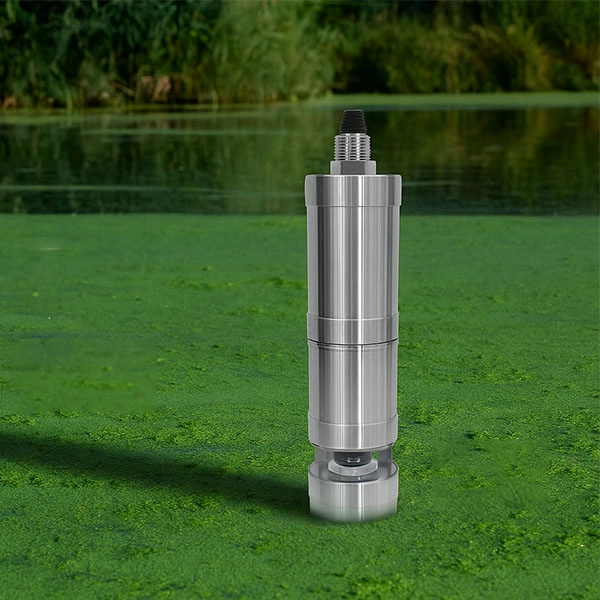
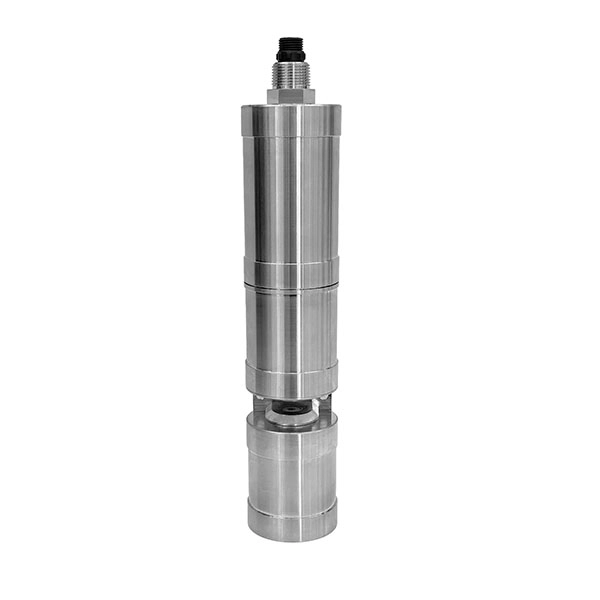

Full-Spectrum Multi-Parameter Water Quality Sensor-BGT-WMPS(K4)
Core Functions
Full-Spectrum Multi-Parameter Detection
Spectral Range: 200–750 nm continuous scanning, accurately matching pollutant absorption peaks.
Parameters Monitored: COD, BOD, TOC, Color, Turbidity, TP, TN, Ammonia Nitrogen (NHN), Nitrate, Nitrite, UV254, CODMn, and more (see full technical specifications).
Anti-Interference Design: Automatic turbidity compensation algorithm eliminates the impact of suspended particles on optical measurements.
Reagent-Free & Eco-Friendly Monitoring
No chemical reagents required, avoiding secondary pollution.
Reduces annual maintenance costs by more than 60%.
Industrial-Grade Reliability & Ease of Use
Plug-and-Play: Submersible installation with 5 m standard cable (customizable). RS-485 output (Modbus/RTU protocol), seamless integration with PLC/SCADA systems.
Long-Term Stability: Xenon lamp light source lifespan >50,000 h; spectral drift <0.1 nm/year. Continuous operation for 6 months without maintenance.
Low Power & Strong Adaptability: Power consumption only 5 W (12VDC), supports solar power supply. Operating temperature: 0–45 °C, resistant to corrosive water environments.
Technical Highlights
Full-Spectrum Absorption Method:
High-energy xenon lamp with fiber-optic spectrometer, resolution up to 0.1 nm. Sensitivity is 8× higher than single-wavelength sensors, supporting identification of over 500 pollutants.Intelligent Compensation Algorithm:
Combines optical path attenuation and suspended solids correction to ensure COD measurement error ≤±5% F.S. (validated against HJ 924-2017 standard).Military-Grade Protection:
316L stainless steel housing, IP68 waterproof rating (10 m underwater for 72 h). Anti-biofouling, resistant to strong acids and alkalis. Suitable for harsh environments such as wastewater plants and rivers.Multi-Parameter Fusion Output:
A single device outputs up to 15 parameters simultaneously, covering organic pollutants, nutrients, and particulates—reducing equipment procurement costs by up to 80%.
Objectives and Significance of River and Lake Ecological Water Quality Monitoring
Monitoring Objectives:Physical Indicators: Water temperature, turbidity, and clarity.
Chemical Indicators: pH, dissolved oxygen (DO), COD (chemical oxygen demand), ammonia nitrogen, total phosphorus/total nitrogen (TP/TN), and heavy metals (such as lead and mercury). Biological indicators: Chlorophyll a (algae content), benthic biodiversity, and E. coli.
Let’s take a quick look at these water quality sensors, and for more information, you can view the product details.
1. COD Sensor (Chemical Oxygen Demand)
Purpose:
Measures the amount of oxygen required to chemically oxidize organic compounds in water.
Provides a quick indication of the total organic pollution load in surface water, groundwater, or wastewater.
Widely used in industrial discharge monitoring, wastewater treatment plants, and river sections to evaluate pollution levels.
Notes:
A higher COD value = higher organic contamination.
Common methods: UV absorbance (254 nm) and reagent-based analyzers.
Advantage: fast detection, suitable for continuous online monitoring.
2. BOD Sensor (Biochemical Oxygen Demand)
Purpose:
Indicates the amount of oxygen consumed by microorganisms when degrading organic matter under aerobic conditions.
Reflects the biodegradable fraction of organic pollutants in water.
Used to assess whether water pollution may cause oxygen depletion, black odor, or aquatic life mortality.
Notes:
Traditional method requires 5 days (BOD₅), making it slow.
Online BOD sensors often use estimation models (based on COD/TOC correlation) or microbial electrode systems.
Key application: inflow/outflow monitoring in wastewater treatment plants, and surface water quality assessment.
3. Ammonia Nitrogen (NH₃-N) Sensor
Purpose:
Detects the concentration of ammonia nitrogen (NH₄⁺ + NH₃) in water.
Indicator of domestic sewage, livestock wastewater, and chemical effluents.
High levels cause eutrophication, algal blooms, and fish toxicity.
Methods:
Ion-selective electrodes (ISE), optical colorimetric sensors.
4. Nitrate (NO₃⁻) Sensor
Purpose:
Key indicator of agricultural non-point source pollution (fertilizer runoff) and wastewater discharge.
Excess nitrates lead to algal growth and drinking water health risks (nitrite toxicity/carcinogenicity).
Methods:
UV spectroscopy (190–230 nm absorption), ion-selective electrodes.
5. Total Nitrogen (TN) and Total Phosphorus (TP) Sensors
Purpose:
Used to evaluate eutrophication risk in natural waters.
TN includes ammonia, nitrite, nitrate, and organic nitrogen.
TP mainly comes from sewage, detergents, and fertilizers.
Elevated TN/TP levels → algal blooms (cyanobacteria outbreaks).
Methods:
Online reagent-based analyzers (digestion + colorimetric), optical estimation.
6. ORP Sensor (Oxidation-Reduction Potential)
Purpose:
Indicates whether water conditions are oxidizing or reducing.
Useful for assessing redox-sensitive pollutants (iron, manganese, nitrates) and disinfection control.
Common in wastewater treatment process monitoring and drinking water disinfection control.
7. Heavy Metal Sensors (Pb, Hg, As, Cd, etc.)
Purpose:
Detects toxic heavy metal ions in water.
Critical for drinking water safety, mining areas, industrial zones, and groundwater protection.
Methods:
Electrochemical voltammetry (for portable/online monitoring), ICP-MS (laboratory standard).
Technical Specifications – Model BGT-WMPS(K4)
| Parameter | Range | Accuracy | Resolution |
|---|---|---|---|
| COD | 0–200 mg/L equiv. KHP | ±5% F.S. | 0.1 mg/L |
| Color | 0–500 Hazen | ±5% F.S. | 0.1 Hazen |
| TOC | 0–150 mg/L | ±5% F.S. | 0.1 mg/L |
| Turbidity | 0–400 NTU | ±5% F.S. | 0.1 NTU |
| BOD | 0–150 mg/L | ±5% F.S. | 0.1 mg/L |
| UV254 | 0–1.5 AU | ±5% F.S. | 0.0001 AU |
| TP (Total Phosphorus) | 0–15 mg/L | ±5% F.S. | 0.1 mg/L |
| TN (Total Nitrogen) | 0–100 mg/L | ±5% F.S. | 0.1 mg/L |
| NHN (Ammonia Nitrogen) | 0–80 mg/L | ±5% F.S. | 0.1 mg/L |
| Nitrate | 0–15 mg/L | ±5% F.S. | 0.01 mg/L |
| Nitrite | 0–10 mg/L | ±5% F.S. | 0.01 mg/L |
| CODMn | 0–100 mg/L | ±5% F.S. | 0.1 mg/L |
Calibration: Spectral calibration
Output Interface: RS-485 (Modbus/RTU)
Power Supply: 12VDC, 5W
Operating Conditions: 0–45 °C, <0.1 MPa
Storage Temperature: –5 to 65 °C
Protection Rating: IP68
Installation: Submersible installation
Cable Length: 5 m standard (customizable)
Housing Material: 316L stainless steel
Wastewater Treatment Plants: Continuous monitoring of COD, BOD, TN, TP, and turbidity for compliance and process optimization.
Surface Water & River Monitoring: Long-term, reagent-free monitoring of organic and nutrient pollutants.
Drinking Water & Reservoirs: Early warning of pollution events and real-time detection of nitrates, nitrites, and organic matter.
Industrial Effluent Monitoring: Real-time measurement of COD, TOC, and turbidity in textile, chemical, and food-processing industries.
Environmental Protection & Research: Multi-parameter field investigations in lakes, wetlands, and groundwater systems.
With its rugged 316L stainless steel housing (IP68), intelligent turbidity compensation, and seamless integration via RS-485 (Modbus/RTU), the BGT-WMPS(K4) provides long-term stable performance even in harsh environments. It is widely used in wastewater treatment, surface water monitoring, industrial effluent management, and environmental research.